
Originally published in The Pennsylvania Independent
Maggie Gladson says that without Medicaid for her son Charlie, the family would be financially wiped out.
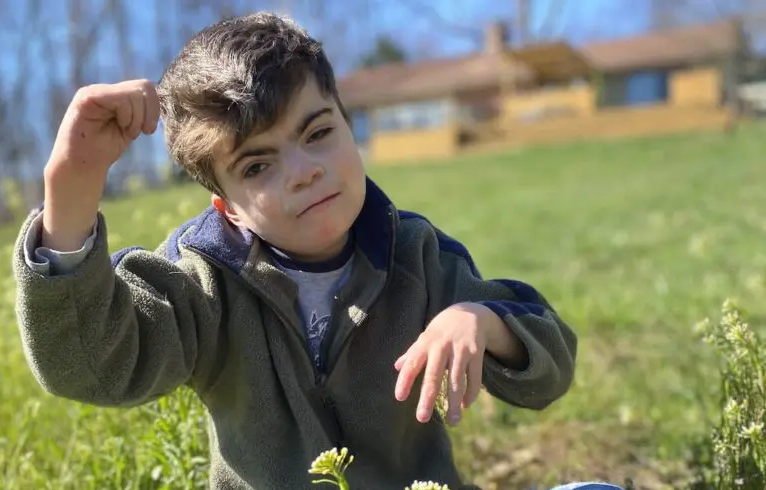
Gladson lives in New Oxford, Pennsylvania, with her husband Chip and their three children, Stella, 21, Mina, 16, and Charlie, 14, on six acres of land.
Charlie was born with a heart condition called hypoplastic left heart syndrome, a congenital condition in which the left ventricle of the heart is severely underdeveloped or missing. He’s had three heart surgeries to date.
He also has Cornelia de Lange syndrome, a genetic condition that affects all his body systems. Charlie is nonverbal and receives home and community-based services, including physical, occupational, and speech therapies.
“I don’t think there is a body system that is unaffected by the combination of those two syndromes,” Gladson told the Pennsylvania Independent.
When President Donald Trump signed the One Big Beautiful Bill Act into law in July, he cut federal Medicaid funding by an estimated $1 trillion over the next decade, according to an analysis by the Center for American Progress.
Gladson said that from the time she can remember, since Charlie’s birth, he’s been on the Pennsylvania waiver program under Medicaid, the state’s variant of the Katie Beckett Medicaid Program, established in 1982 by President Ronald Reagan. Waiver programs allow eligible kids with disabilities, regardless of their family’s income, to receive Medicaid coverage of in-home and community-based care instead of having to stay in a hospital or other health care facility for services to be covered.
Nearly 25% of Pennsylvanians are enrolled in Medicaid; 750,000 of those enrollees are people with disabilities.
Gladson’s family has health insurance through her husband’s work as a community college professor. It covers their basic medical care; Medicaid covers the expenses for Charlie’s care that the insurance doesn’t.
Thanks to Medicaid coverage, Gladson said, Charlie can have a full-time nurse with him during school. It covers the medications that keep him alive; the supplies that come with his medications, including the supplies for his gastrostomy tube or G-tube, which delivers water and medicine; an iPad to help him communicate; syringes; and the dynamic ankle-foot orthosis devices he uses to help him walk.
“We absolutely would have been bankrupted very quickly after his birth without Medicaid,” Gladson said. “He could not attend school without a nurse. Being in a rural community, there’s one nurse per school, and it’s actually possible at this point, they might even be splitting the one nurse between schools, so there’s nobody who can sit next to him all day long to watch what’s going on with him.”
Gladson said Charlie is so much more than his illnesses. “He has a sense of humor that is a little bit dark and mostly mischievous,” she said. “He loves music. We must have six or seven keyboards around the house. He just wakes up in the morning, the first thing he does is go to the piano and start playing. When he gets home from school, he plays the piano. … He’s active, he’s engaged, he’s funny, he plays tricks on people. He’s very willful and has extremely strong likes and dislikes. I mean, he’s a kid.”
“It’s just infuriating to me that it’s so abstract to people who aren’t actually living this life,” Gladson said, “that they just don’t seem to grasp the effect it will have, or, even worse, it’s possible that they do, and the priority then is, this mythical waste-, fraud- and abuse-cutting, which is just ridiculous. There’s plenty of places to cut that has nothing to do with health care for people; that’s not what needs to get cut. If there are layers in the system that need to get cut, if a multibillionaire CEO needs to have a pay downgrade, those are the kinds of things that I don’t seem to be able to get across to some people — although it does feel a little like the tide is turning, but process is slow, and we’ll see what we get to at the end result.”
My son, Avery (21), also has HLHS and CdLS. He now has a pacemaker. BEFORE he came home from the hospital the very first time he was already a million dollar baby (literally) and he wasn’t diagnosed with CdLS until years later! He was Baby #1 in the Modified Norwood Procedure surgery. If it weren’t for Medicaid, there’s no way we could’ve paid for ANY of his surgeries along the way. Plus all of his meds, therapies, equipment, and formula, etc!